
Reviewed · HARARE CITY TOURS
Harare City Tour & Zimbabwe Highlights
Harare rewards curious visitors. This full-day outing pairs the capital’s civic center with Mbare’s daily street life, Epworth’s remarkable rock formations, and Domboshawa Hill’s cave paintings. I like the way it moves beyond polished city sights, and I like that the guide provides historical and cultural context instead of simply pointing at buildings. The main concern is value: at $128 per person, extra entrance costs, lunch, and possible last-minute changes can make the final bill higher than expected.
You’ll travel in an air-conditioned vehicle, with bottled water and parking included. Pickup is offered, and the group can include up to 15 people. The tour is a good fit if you want a broad introduction to Harare in one day, but it may disappoint if you expect every advertised stop or cost to be fixed in advance.
In This Review
- Key points to know before booking
- Starting in central Harare at Africa Unity Square
- Driving past parliament, courts, and the Kopje
- Mbare: Harare’s most revealing stop
- Epworth’s Balancing Rocks and city views
- Lunch is your responsibility
- Domboshawa Hill, cave paintings, and a final walk
- What the guide adds to the day
- Transport, group size, and the pace of one day
- Is $128 a fair price?
- Who should book this Harare experience?
- Should you book Harare City Tour and Zimbabwe Highlights?
- FAQ
- Where does the tour begin?
- How long does the experience last?
- What places are visited?
- Is lunch included?
- Are entrance fees included?
- What is included in the price?
- How many people can join the tour?
- Can most people participate?
- What is the cancellation policy?
Key points to know before booking
- Three very different sides of Harare: You move from government buildings and central squares to Mbare’s bus terminus and produce market, then out to rocky countryside.
- Africa Unity Square sets the context: The opening orientation covers Zimbabwe’s pre-colonial, colonial, and post-colonial periods, plus the country’s religious variety.
- Mbare gives the day its human scale: This old township connects Harare with the rest of Zimbabwe and offers a look at ordinary commerce and movement.
- Epworth has memorable rock shapes: The Money Rock and Flying Boat formations are the main attractions, with views toward parts of the city.
- Domboshawa adds art and walking: You’ll see a bushman cave, paintings, a balancing rock, and an interpretative center.
- Budget for extras: Lunch is not included, and park entrance fees are paid directly to the supplier.
Starting in central Harare at Africa Unity Square
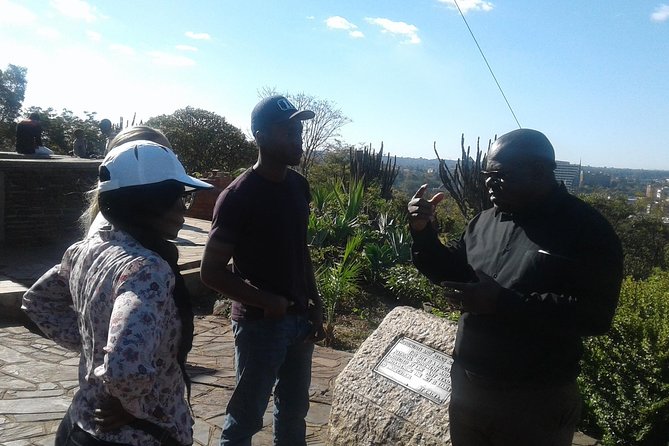
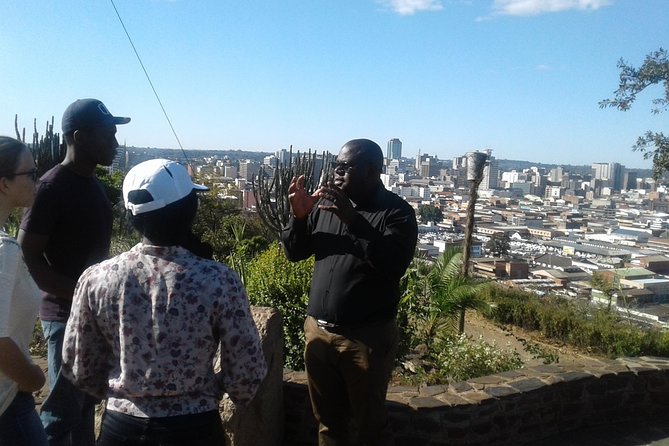
The day begins with a hotel-lobby meeting and a short drive into central Harare. The first major stop is Africa Unity Square, formerly called Cecil Square. This is not just a place to take a quick photograph. It is the point where the guide lays out the shape of Zimbabwe and helps you understand Harare before the day moves into markets, townships, and hills.
I like this opening because a city tour can otherwise become a parade of names and buildings. Here, you receive an orientation to the country in three broad periods: pre-colonial Zimbabwe, the colonial era, and the post-colonial period. The guide also explains the three arms of government, using nearby buildings and landmarks to connect the subject to the city around you.
The surrounding area includes the country’s judiciary, legislative, and executive institutions. You’ll also see the oldest hotel in Harare, along with places of worship that help illustrate Zimbabwe’s religious variety. The religious portion is useful because it treats culture as part of daily life, not as a decorative extra added to a sightseeing route.
This section lasts about two hours and has no admission fee. That makes it a strong use of time, especially if you are new to Zimbabwe and want a clear base before visiting more informal parts of the city.
More of Harare in a day:
- HARARE CITY TOUR ADVENTURES !!
★ 4.9 · 6 reviews - Great Zimbabwe Tour from Harare
★ 5.0 · 6 reviews - Harare: Half Day Outdoor Adventure
★ 4.8 · 5 reviews
Driving past parliament, courts, and the Kopje
From the central business district, the route continues past important public buildings, including parliament, judiciary and executive offices, and the central bank. The exact amount of time spent at each building is not specified, so think of this as a guided city drive with commentary rather than a series of formal interior visits.
The route also passes through the Kopje. From a practical point of view, this portion helps you connect Harare’s central streets with its wider setting. You get a sense of how the government quarter, commercial center, and older neighborhoods relate to one another.
I would pay close attention to the guide here. The buildings themselves may not hold your attention for long if you are not interested in architecture or government, but the explanations can turn an ordinary drive into a useful introduction to Zimbabwe’s present-day institutions.
Because access to some areas can change for security reasons, the route is not guaranteed to remain identical on every date. The operator has explained that restrictions may require changes, sometimes with little notice. That is a reasonable reality on a city tour, but you should accept some flexibility rather than expecting a rigid schedule.
Mbare: Harare’s most revealing stop
Mbare is where the tour shifts from official Harare to working Harare. It is the city’s oldest township and one of the oldest in Zimbabwe. The area connects the capital to the rest of the country, and it is home to the country’s largest bus terminus and biggest local fresh produce market.
This is likely to be one of the most useful stops of the day. Government buildings tell you how the state operates. Mbare shows you how people move, trade, shop, and connect across the country. The contrast is the point.
You may find Mbare more intense than the quieter central district. It is a busy transport and market area, so the experience is about observation and explanation rather than a calm, carefully arranged sightseeing setting. Keep your attention on the guide and your belongings close, as you would in any major transport hub or market.
The tour description does not specify exactly how long you remain in Mbare, nor does it promise a particular shopping activity. I would treat it as a guided look at urban life, not as a chance to browse every stall or make a large purchase.
For visitors who want only monuments, this may feel less comfortable or less photogenic. For me, it is one of the places that gives the outing its purpose. You see a city that is not reduced to official buildings and tidy viewpoints.
Epworth’s Balancing Rocks and city views
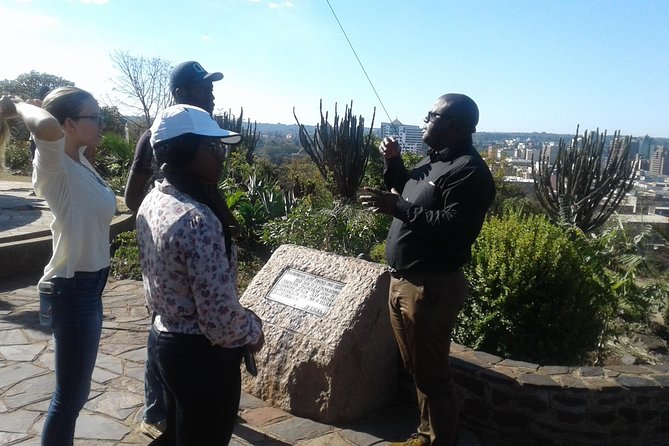
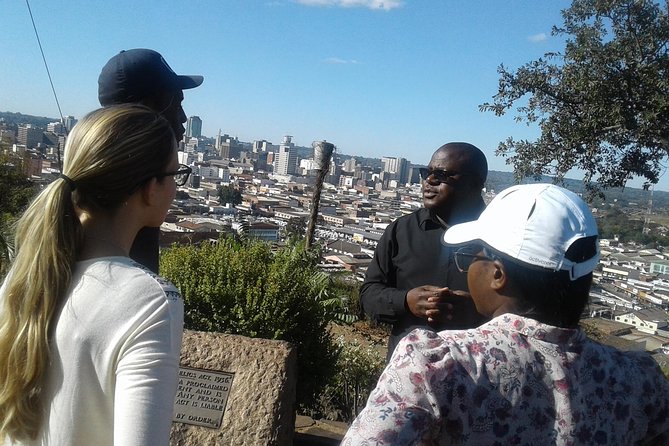
After the central-city section, the vehicle heads to Chiremba, also called Epworth, for the Balancing Rocks. Admission is not included, so you pay the entrance fee directly to the supplier. Confirm the current amount before setting out, since the total price of the day depends partly on this additional charge.
The rock formations are the main reason to come. The route highlights the Money Rock and Flying Boat formations, along with a viewpoint looking toward parts of Harare. These formations give the tour a clear change of pace after the roads and markets of the morning.
You have about one hour here. That is enough for a focused visit, photographs, and an explanation from the guide, but it is not a long hiking session. If you are hoping for an extensive nature walk, this portion may feel brief.
The name Balancing Rocks describes the visual effect well: huge stone forms appear to rest in unlikely positions. The appeal is immediate, even if you know little about geology. It also gives you a chance to see how natural features remain part of the city’s cultural identity and sightseeing appeal.
The extra admission fee is a small detail that matters because the tour already costs $128. I would ask before booking what the current entrance charge is and how payment is handled. An earlier experience on this route included unexpected expenses, so it is sensible to request a clear estimate for all likely costs.
A few more Zimbabwe trips worth weighing up
- Half Day Livingstone City, Museum and Victoria Falls Tour
★ 4.5 · 2 reviews - Bulawayo City Guided Tour
★ 5.0 · 2 reviews
Lunch is your responsibility
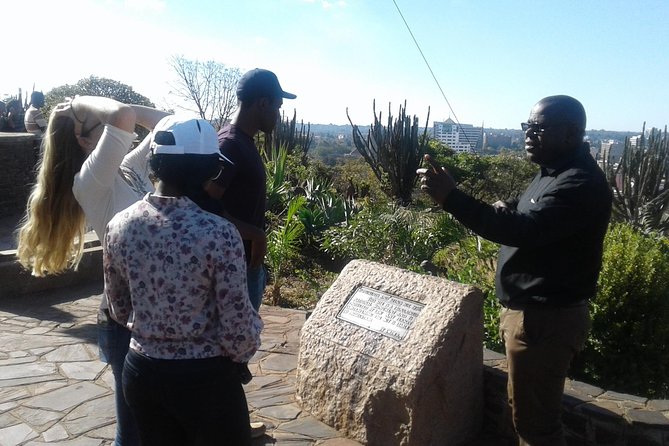
Lunch takes place between the Epworth and Domboshawa portions, but it is not included in the price. The exact restaurant, meal, and lunch duration are not specified. That gives the operator some flexibility, but it means you should not assume that a meal has been arranged or prepaid.
Ask in advance where lunch is expected to happen and what payment method is accepted. If you have dietary needs, ask before the day begins. The tour includes bottled water, which is useful, but you should not confuse that with a full meal provision.
One especially positive account of the service praised the pre-tour briefing and the chance to eat local road food. That suggests the guide may help you approach lunch as part of the cultural experience, but the details can vary, and you should not book on the assumption that a specific meal is guaranteed.
The best attitude is simple: allow time, carry a little extra money, and treat lunch as an independent expense. This is also where the $128 price needs careful thought. The fee covers private tour transport, guidance, water, and parking, but not every cost connected to the day.
Domboshawa Hill, cave paintings, and a final walk
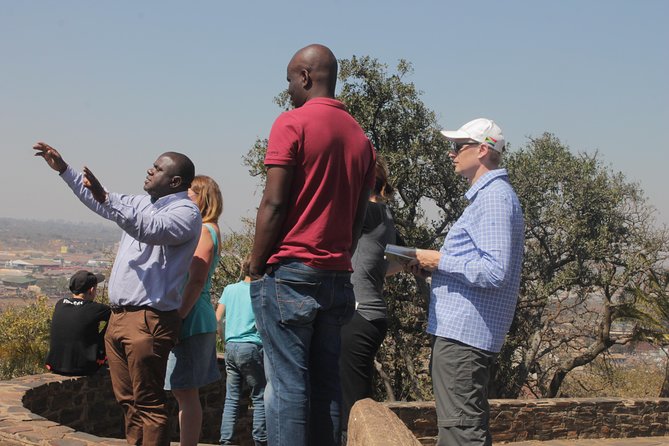
After lunch, the route turns northeast toward Domboshawa Hill. This is the most active part of the outing, with about two hours at the site. You’ll walk up and down the hill to see a bushman cave, paintings, and another balancing rock.
Domboshawa adds a cultural layer that Epworth does not provide. At the interpretative center, the guide explains the area and its meaning. You also have time to ask questions as you move around the hill, which is valuable if you want more than a quick look at painted rock surfaces.
The route is not described as difficult, but it does involve going up and down a hill. Most people can participate, though anyone with limited mobility should ask the operator for a clearer description of the walking conditions before booking. The tour’s general participation note says most people can take part, not that every section is suitable for every physical ability.
The cave paintings are the reason to slow down. Their value comes from the connection between place, early human activity, and the wider story of Zimbabwe. The guide’s explanation matters here because the paintings may not be easy to interpret on your own.
Domboshawa also helps break up the day physically. After a morning of buildings, driving, and Mbare’s crowded public spaces, the hill gives you room to walk, ask questions, and look outward. You should wear sensible shoes and bring sun protection, although the operator’s stated inclusions only guarantee bottled water, transport, and parking.
What the guide adds to the day
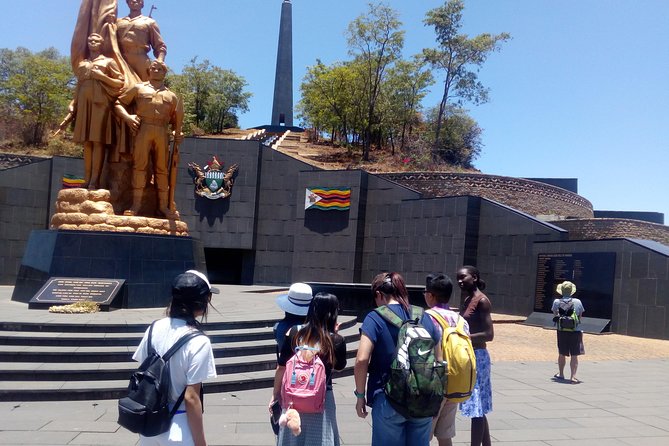
The strongest part of this experience is the guiding. One highly positive account praised the pre-tour briefing, the cultural and historical explanations, and the guide’s friendly manner. Another described the guide as insightful and good company.
That praise points to the tour’s real value. The sights are worthwhile, but they are spread across several types of place. Without explanation, Africa Unity Square could be just another city square, Mbare just another market district, and Domboshawa just another rocky hill.
You should expect the guide to explain the country’s past and present, religious variety, government structure, and local life. The tour also gives you room to ask questions, particularly at Domboshawa. If you enjoy conversation and context, this is a better match than a silent transfer between photo stops.
No guide’s name is provided, so I cannot tell you who will lead your departure. Service can depend on the individual guide, and the accounts of the day suggest that the person leading the outing has a large effect on how much you get from it.
Transport, group size, and the pace of one day
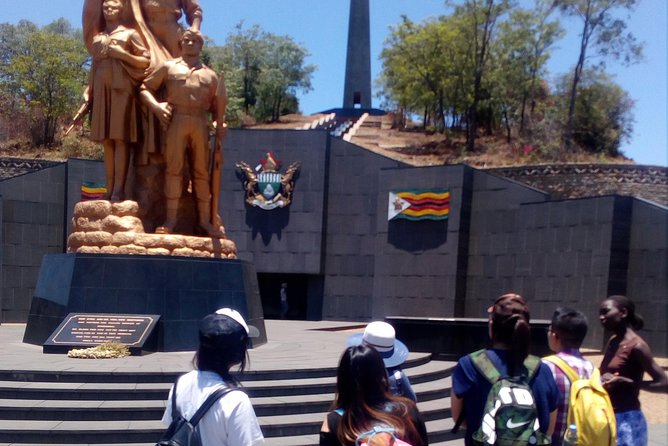
The outing lasts approximately one day, with about five hours assigned to the principal sightseeing sections: two hours in central Harare, one hour at Epworth, and two hours at Domboshawa. Add driving, lunch, and transitions, and you should keep most of the day free.
An air-conditioned vehicle is included. That matters in a long day with several road sections, particularly when you are moving between the city and sites outside the center. Bottled water and parking are also included, while entrance fees and lunch are not.
The maximum group size is 15 people. That is small enough for a guide to address questions, though it is not a private, one-to-one tour. Pickup is offered, and the meeting point is Harare, with the day beginning at your hotel lobby.
The tour is booked, on average, about 12 days ahead. That gives you a useful planning clue: if you want a specific date, do not leave it until the last minute. Confirmation is provided when you book, but a technical problem once caused booking emails not to reach the operator, leading to a missed pickup and a request for a full refund. The company apologized and said it was working to fix the issue.
That incident appears to be a service failure rather than a planned feature, but I would still confirm the pickup time and meeting place shortly before the tour. It is a small step that can prevent a very large waste of a day.
Is $128 a fair price?
At $128 per person, this is not a cheap city outing. The value depends on what you want from it. If you arrange separate taxis, guides, parking, and visits to four very different areas, the convenience of one vehicle and one guide may justify the cost.
The price makes more sense for a first visit to Harare, especially if you have limited time and want both city orientation and nearby cultural sites. It is less attractive if you only want a short CBD walk or if you are comfortable arranging local transport yourself.
You should also add lunch and park entrance fees to your mental budget. One critical assessment found the tour interesting and praised the guide, but considered it expensive because some promised elements were not included and extra unannounced costs appeared during the day.
The operator has explained that security restrictions can force changes to the route and that some access limits may be announced at short notice. That explanation is fair, but you still deserve clear communication. Ask what is included, what may change, and what fees you should expect before you pay.
Who should book this Harare experience?
I would recommend it to first-time visitors who want a broad introduction rather than a single attraction. It suits people who enjoy local markets, public history, cultural discussion, unusual rock formations, and a moderate amount of walking.
It also works well for anyone who wants transport handled for the day. You do not need to piece together a route between central Harare, Mbare, Epworth, and Domboshawa, and the air-conditioned vehicle makes the long day easier.
I would be more cautious if you have a tight schedule, need fixed access to every stop, or dislike extra payments. The route may change because of security restrictions, lunch is separate, admission fees are separate, and the advertised service has had at least one serious communication failure.
The rating information available for this experience is mixed, at 3.5 from 14 reviews. That matches the overall picture: the content and guiding can be very good, but operations and price clarity need attention.
Should you book Harare City Tour and Zimbabwe Highlights?
Book it if you want Harare explained through its institutions, markets, people, and nearby cultural sites in one long day. The combination of Mbare, Epworth, and Domboshawa gives you a much fuller picture than a standard CBD drive.
Before confirming, ask for the current entrance fees, lunch plan, pickup confirmation, and any route restrictions. If the operator gives you clear answers and you value an informed guide more than the lowest possible price, this can be a worthwhile introduction to Harare.
If you want a tightly controlled schedule with no surprise costs, choose with caution. The sights are appealing, but the experience depends heavily on communication, the guide assigned, and how much flexibility you can accept.
FAQ
Where does the tour begin?
The tour begins with a hotel-lobby meeting in Harare, Zimbabwe. Pickup is offered.
How long does the experience last?
It lasts approximately one day. The scheduled sightseeing portions total about five hours, before adding driving, lunch, and time between stops.
What places are visited?
The route includes Africa Unity Square and central Harare, Mbare, Chiremba or Epworth Balancing Rocks, and Domboshawa Hill.
Is lunch included?
No. Lunch is not included in the tour price.
Are entrance fees included?
No. Park entrance fees are paid directly to the supplier.
What is included in the price?
The stated inclusions are bottled water, an air-conditioned vehicle, and parking fees.
How many people can join the tour?
The activity has a maximum group size of 15 people.
Can most people participate?
Yes. The tour information says most people can participate. Domboshawa includes walking up and down a hill, so you should ask the supplier for more details if mobility is a concern.
What is the cancellation policy?
You can cancel for a full refund if you do so at least 24 hours before the local start time. Changes or cancellations made less than 24 hours before the start are not accepted for a refund. If poor weather causes the operator to cancel, you can receive a different date or a full refund.
Newly listed in Zimbabwe
- Zimbabwe: Victoria Falls Full-Day Package★ 5.0 · 2 reviews
- Zimbabwe & Zambia side :Private Guided tour of the Falls★ 5.0 · 2 reviews
- Zambezi River: Kid-Friendly Whitewater Rafting★ 5.0 · 3 reviews
- Zimbabwe: Sundowner Cruise (Standard) Zambezi River★ 4.8 · 5 reviews
- Zambia : Victoria Falls : Nature Bike Tour★ 5.0 · 2 reviews
- Zambezi 3hr Game Drive★ 4.6 · 5 reviews
- Zambezi River: Dinner Cruise★ 5.0 · 2 reviews
- Zambezi National Park Private Wildlife Safari (4 – 10 hours)★ 4.9 · 9 reviews
Harare City Tours, compared.

MASVINGO; GREAT ZIMBABWE MONUMENT TOUR – FROM HARARE
Read our review →
Victoria Falls and Harare Airport Transfers and Car Rentals
Read our review →Browse the lists this tour appears in