
Reviewed · GREAT ZIMBABWE & HERITAGE SITES
Great Zimbabwe
Stone walls, open sky, and a long road. Great Zimbabwe offers ancient dry-stone ruins, original bird sculptures, and a clear look at the skill of the ancestral Shona people. I especially like the small group size, with no more than eight people, and the chance to see the Great Enclosure, hill complex, and valley ruins with a guide.
I also like that the day includes breakfast or brunch, a Zimbabwean lunch, the museum, and traditional Mbira music. The main drawback is the journey: you should expect roughly four to four and a half hours each way from Bulawayo, making this a demanding 12-hour day in the vehicle.
In This Review
- Great Zimbabwe at a glance
- Why Great Zimbabwe deserves your time
- The 6:00 am start and long drive
- Breakfast before the stone city
- Walking through the Great Enclosure
- The hill complex and valley ruins
- The museum and the Zimbabwe birds
- A Zimbabwean lunch after the ruins
- Mbira music at the cultural village
- What the $260 price includes in practical terms
- Heat, weather, and what to pack
- Who should book this Great Zimbabwe tour?
- Should you book it?
- FAQ
- How long does the Great Zimbabwe tour last?
- What time does the tour start?
- How long is the drive to Great Zimbabwe?
- What is included with the tour?
- What parts of Great Zimbabwe will I see?
- How many people can join the group?
- What should I bring?
- What happens if bad weather cancels the tour?
Great Zimbabwe at a glance
- A full day from Bulawayo: The early 6:00 am pickup and long drive make this a serious day trip, not a quick sightseeing stop.
- Three major ruin areas: You visit the Great Enclosure, hill complex, and valley ruins, each offering a different view of the old city.
- Original Zimbabwe birds: The museum contains stone carvings of the bird sculptures that became a national symbol.
- Small groups of up to eight: This gives you a better chance to hear explanations and ask questions than on a large coach tour.
- Food is part of the day: Breakfast or brunch is provided on arrival, followed by a hearty Zimbabwean lunch.
- Culture beyond the stones: Traditional Mbira music at the cultural village adds a living connection to Shona heritage.
Why Great Zimbabwe deserves your time
Great Zimbabwe is not simply a pile of old walls. It was a major city founded in the 9th century, and the surviving stonework gives you a strong sense of the power and organization behind it.
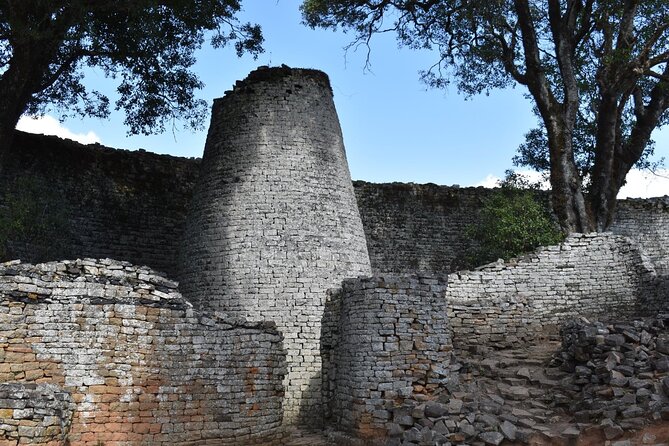
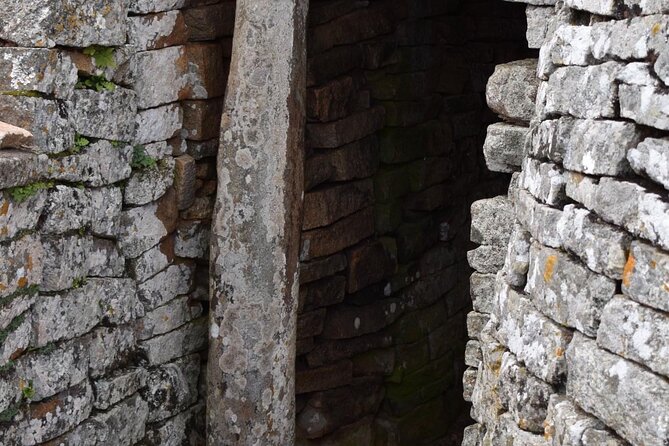
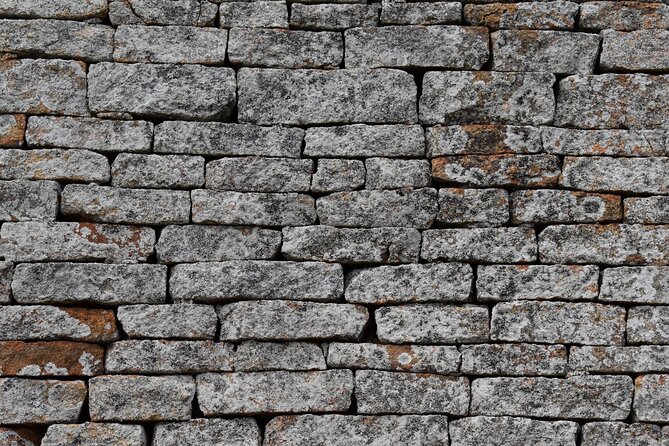
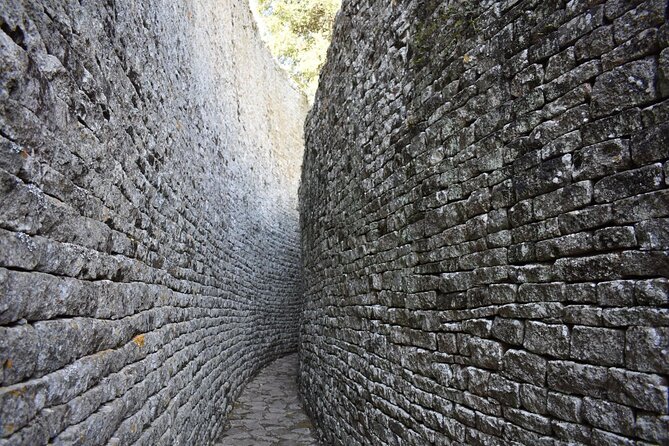
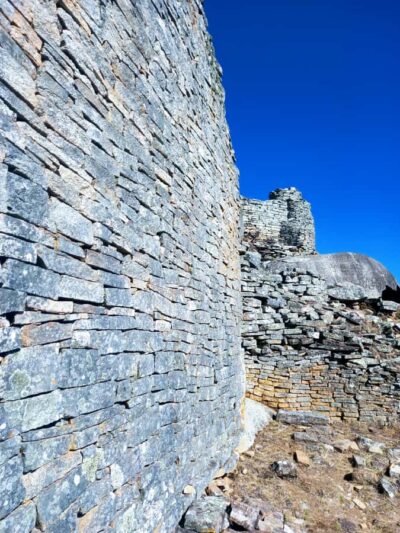
The site is made from freestanding dry-stone walls. There is no mortar holding the blocks together. That detail matters because the walls have survived for centuries through careful placement, balance, and skilled construction.
The ruins are often described as second only to Egypt’s pyramids in size among major African monuments. That comparison gives you a rough idea of the scale, but the character is completely different. Egypt’s pyramids are monumental tombs. Great Zimbabwe feels like the remains of a living city, with enclosures, hill structures, passageways, and valley settlements spread across the site.
I like that the tour focuses on the people who built the city. The ancestral Shona communities were not treated as a footnote to the stones. Their architecture, symbols, music, and spiritual beliefs are all part of the day.
The chevron patterns carved into the walls are one of the details worth watching for. These repeated designs are linked with fertility and give the stonework a symbolic quality beyond its practical use.
More Heritage Site Trips in Zimbabwe:
- The Best of Matobo
★ 5.0 · 39 reviews - Matobo Rhino Encounter
★ 5.0 · 33 reviews - Matobo Hills Day Trip with Rhino Tracking
★ 5.0 · 22 reviews
The 6:00 am start and long drive
Your day begins early. Pickup is offered at 6:00 am, and the drive from Bulawayo can take about four hours, with one account describing roughly four and a half hours for the round trip in each direction.
That is the central trade-off. You spend many hours getting there, but Great Zimbabwe is too important to judge only by convenience. If you have limited time in Zimbabwe and want to understand the country’s cultural roots, this journey can be worthwhile.
I would treat the drive as part of the day rather than an unfortunate interruption. The tour is designed for a small party, and the driver can explain the day’s plan before you set out. One guide named in the tour experience is Blessing, who handled both driving and guiding and was described as accommodating.
The early start also helps you reach the ruins before the hottest part of the day. This matters because much of the visit takes place outdoors, with walking between the main areas and little relief from the sun.
The vehicle time may be tiring, especially if you prefer short sightseeing days. If you are staying in Bulawayo and have only one free day, check your energy level before booking. This is a cultural excursion with a long road attached.
Breakfast before the stone city
Breakfast is included when you arrive, although it may feel more like a late breakfast or brunch after the morning drive. That timing is useful. You do not need to depend on an early meal before pickup, and you can eat before starting the walking portion.
This is a small but practical feature. A site visit of around two hours is much easier when you have food and water in you, especially on a hot day.
The meal also gives you a short pause between the drive and the ruins. Use it to apply sunscreen, adjust your hat, and make sure your shoes are comfortable before you set out.
Walking through the Great Enclosure
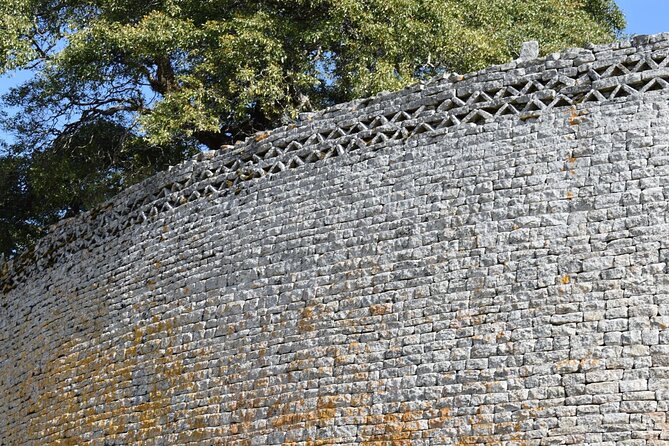
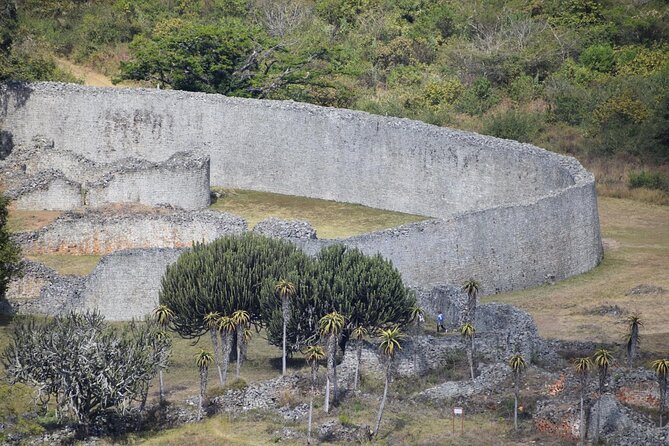
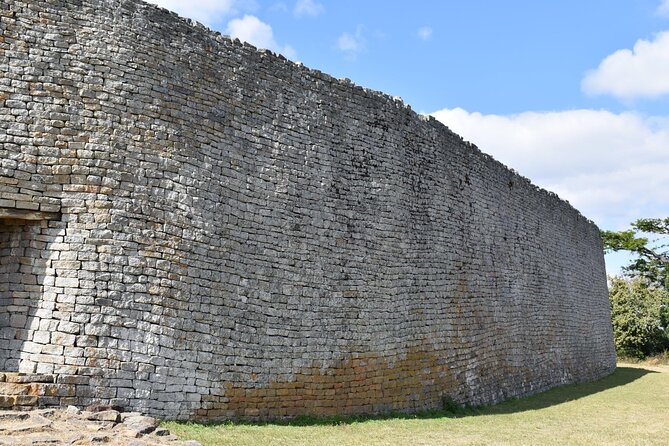
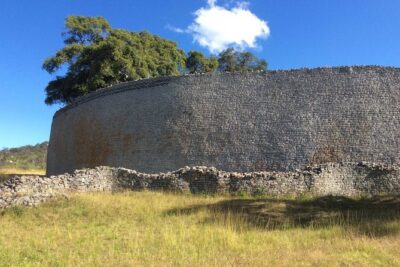
The Great Enclosure is likely to be the visual centerpiece of the visit. Its large curved walls show the scale of the ancient city and the precision of the dry-stone building method.
You will see walls made without mortar, with blocks carefully stacked to create strong, freestanding structures. The chevron designs are especially important here. They are not just decoration, and your guide’s explanation helps connect the patterns with fertility and belief.
I would pay attention to how the walls look from different angles. At close range, you notice the individual stones and repeating patterns. From farther back, the enclosure’s size becomes easier to understand.
The open setting can make the ruins feel calm and spacious. One of the appealing features of this excursion is the possibility of having much of the attraction to yourself, rather than moving through it in a crowded group.
The exact walking pace will depend on the guide and group, but the guided tour is described as taking about two hours and covering the main areas. You should be prepared for outdoor walking rather than a quick roadside photo stop.
Same river, a very different pace:
- Helicopter Scenic Flight over Victoria Falls 12-13 minutes Flight
★ 5.0 · 1,391 reviews - Victoria Falls: Dinner Cruise on the Zambezi River
★ 4.9 · 925 reviews - Dinner Cruise on the Zambezi River
★ 5.0 · 518 reviews - Victoria Falls: Chobe National Park Day Trip with Lunch
★ 4.7 · 518 reviews
The hill complex and valley ruins
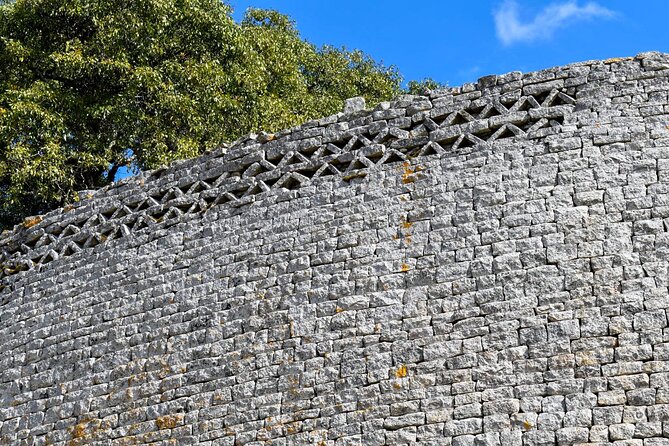
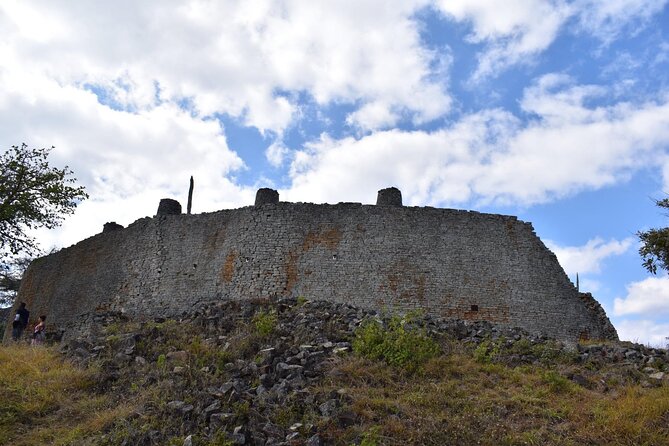
The hill complex gives you another way to read Great Zimbabwe. Instead of seeing only the giant enclosure, you begin to understand how different parts of the old city related to one another.
The valley ruins add another layer. Together, the Great Enclosure, hill complex, and valley remains show that Great Zimbabwe was a broad urban center, not one isolated ceremonial structure.
I appreciate this three-part layout because it prevents the visit from becoming repetitive. Each area gives you a different setting for the stonework, and the guide’s explanations help you connect the separate ruins into one city.
You may also find that the hill area makes the physical setting more demanding than the enclosure itself. Wear closed-toe walking shoes with a firm sole. Sandals are a poor choice for uneven ground, and comfortable shoes will make the long walking portion less bothersome.
The museum and the Zimbabwe birds
The museum is a smaller stop, but it adds something the outdoor ruins cannot. Inside, you see original stone carvings of the Zimbabwe birds.
These bird sculptures are among the most recognizable symbols connected with the site and with Zimbabwe itself. Seeing the original carvings gives the symbol a physical context. It is no longer just an image on a flag or souvenir.
I would not rush this stop. After walking among large walls, the museum offers a closer look at the objects and ideas associated with the city. It also provides a useful break from the heat.
The museum is not presented as a massive collection, so keep your expectations realistic. Its value comes from the original carvings and their connection to Zimbabwean identity, not from a long list of exhibits.
A Zimbabwean lunch after the ruins
After the site visit, the tour includes a hearty Zimbabwean lunch. This is welcome after the early start, long drive, and outdoor walking.
The food makes the day feel more complete. You are not simply transported to a monument, given a short explanation, and sent back to town. The meal gives you another chance to experience local culture in a practical way.
Details about the menu are not specified, so I would not book this expecting a particular dish. Think of it as a substantial included meal that helps break up the return journey.
If you have dietary needs, it is sensible to ask about them before booking. The tour information confirms that lunch is included, but it does not list menu choices or special meal arrangements.
Mbira music at the cultural village
The cultural village adds a living cultural element to a day centered on archaeological remains. You hear traditional Mbira music, an important part of life and a way to communicate with higher spirits.
This stop matters because it connects the old city with cultural practices that continue to carry meaning. You get more than architecture and dates. You also hear an instrument tied to spiritual and social life.
I like this part of the program because it gives the day a human ending. The stones explain what was built. The music offers a sense of how culture can continue through sound, ritual, and shared practice.
The description does not give the length of the music session, so you should think of it as one part of the broader visit rather than a full concert. Its value is in the setting and cultural context.
What the $260 price includes in practical terms
At $260 per person, this is not a cheap day trip. The price makes more sense when you consider what the day involves: hotel pickup, a private-feeling small group capped at eight people, a long return drive, breakfast or brunch, a guided visit, museum access, lunch, and the cultural village.
The strongest value comes if you want a dedicated Great Zimbabwe day without arranging your own transport. The distance is the difficult part of visiting independently, and the tour removes that planning burden.
The small maximum group is also important. With only eight people, you should have a better chance of hearing the guide and getting explanations tailored to the group. A smaller party can also feel less rushed at the walls and museum.
The price is harder to justify if you are mainly looking for a quick photo stop or if you have several days available to arrange a less expensive option. This is a full service excursion built around a major historical site.
I would compare the cost with the time required, not only with the entry price of the ruins. The tour takes about 12 hours, so it occupies most of your day. For someone who values convenience and interpretation, that can be fair value. For a budget-focused visitor, it is a significant expense.
Heat, weather, and what to pack
Great Zimbabwe is an outdoor archaeological site, and the practical packing advice is straightforward:
- Closed-toe walking shoes: Choose comfort and grip over style.
- Hat and sunglasses: You may spend long periods outside in bright sun.
- Sunscreen: Apply it before leaving and bring enough for the day.
- Insect repellant: This is specifically recommended for the excursion.
- A light jacket: One account found a jacket useful, particularly during the rainy season or cooler portions of the day.
Good weather is required for the experience. If poor weather causes cancellation, you are offered another date or a full refund.
The heat is worth taking seriously. A hat and sunscreen are not optional extras for this itinerary. The tour includes walking, standing, and time outdoors, so you should also plan to carry water, although the supplied information does not confirm whether bottled water is provided.
Who should book this Great Zimbabwe tour?
I would recommend it most strongly to people who care about Zimbabwean heritage, ancient architecture, and guided interpretation. It suits anyone who wants the major parts of Great Zimbabwe covered in one organized day.
It is also a good fit if you are staying in Bulawayo and do not want to arrange a long-distance trip yourself. The pickup, driver, meals, and small group simplify a day that would otherwise require more planning.
Families and mixed-age groups may find the format workable because most people can participate, and service animals are allowed. Still, you should consider the long road journey and outdoor walking before booking for young children or anyone who struggles with extended time in a vehicle.
The tour may be less suitable if you dislike early starts, long drives, or hot outdoor sites. Great Zimbabwe rewards patience. It is not a quick attraction that fits neatly into a few spare hours.
The experience has a 4.9 rating from 11 reviews, with 100 percent recommending it. The most praised elements are the sense that the site is worth the long drive, the personal service from guides such as Blessing, the included brunch, and the chance to learn how the ancient city worked.
Should you book it?
Book this tour if Great Zimbabwe is high on your Zimbabwe wish list and you want transport, meals, and a guide handled in one day. The ruins, original bird carvings, chevron patterns, and Mbira music give you a fuller visit than a simple monument stop.
Skip it if the $260 price feels too high for a long day on the road, or if you prefer a slower stay near the site. For most history-minded visitors based in Bulawayo, though, the journey is the price of seeing one of Zimbabwe’s most important cultural places, and the small group format helps make the long day feel worthwhile.
Free cancellation is available if you cancel at least 24 hours before the 6:00 am start time. Changes made later are not accepted, and late cancellations are not refunded.
FAQ
How long does the Great Zimbabwe tour last?
The experience lasts approximately 12 hours, including the drive, meals, guided ruins visit, museum, and cultural village.
What time does the tour start?
Pickup begins at 6:00 am.
How long is the drive to Great Zimbabwe?
The drive from Bulawayo takes about four hours in one account, while another describes roughly four and a half hours for the drive to and from the site.
What is included with the tour?
The experience includes pickup, a guided visit to Great Zimbabwe, breakfast or brunch, a Zimbabwean lunch, the museum, and traditional Mbira music at the cultural village.
What parts of Great Zimbabwe will I see?
The tour covers the Great Enclosure, hill complex, and valley ruins.
How many people can join the group?
The group has a maximum of eight travelers.
What should I bring?
Bring closed-toe walking shoes, a hat, sunglasses, sunscreen, and insect repellant. A jacket can also be useful, especially during the rainy season.
What happens if bad weather cancels the tour?
You will be offered a different date or a full refund. You can also cancel for a full refund if you do so at least 24 hours before the experience begins.
Newly listed in Zimbabwe
- Zimbabwe: Victoria Falls Full-Day Package★ 5.0 · 2 reviews
- Zimbabwe & Zambia side :Private Guided tour of the Falls★ 5.0 · 2 reviews
- Zambezi River: Kid-Friendly Whitewater Rafting★ 5.0 · 3 reviews
- Zimbabwe: Sundowner Cruise (Standard) Zambezi River★ 4.8 · 5 reviews
- Zambezi 3hr Game Drive★ 4.6 · 5 reviews
- Zambia : Victoria Falls : Nature Bike Tour★ 5.0 · 2 reviews
- Zambezi River: Dinner Cruise★ 5.0 · 2 reviews
- Zambezi National Park Private Wildlife Safari (4 – 10 hours)★ 4.9 · 9 reviews
Great Zimbabwe & Heritage Sites, compared.

Great Zimbabwe: The World’s View Historical Site !!
Read our review →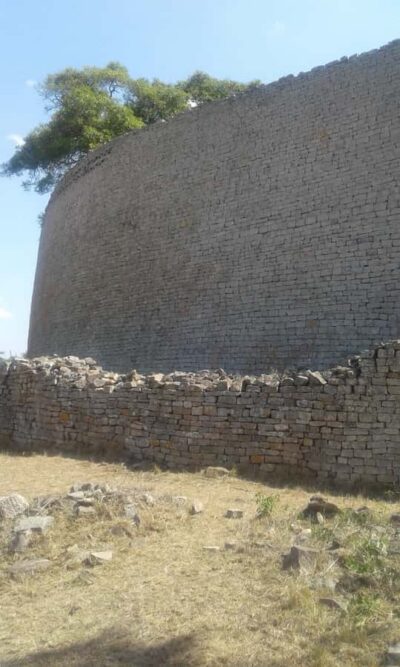
MASVINGO; GREAT ZIMBABWE MONUMENT TOUR – FROM HARARE
Read our review →Browse the lists this tour appears in