
Reviewed · WHITEWATER RAFTING
White Water Rafting in Zimbabwe
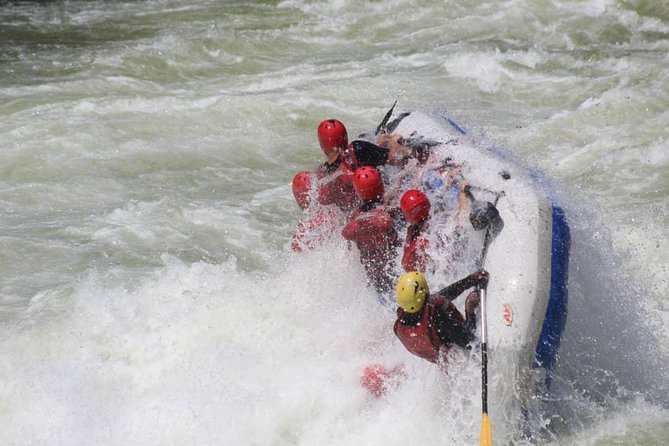
Feel the Zambezi turn wild below Victoria Falls. This is not a gentle float but a full-day test on some of the highest commercially runnable rapids anywhere, with guides such as James and Colgate helping you read each wall of water. I like the Grade V rapids and the fact that the $120 price includes town transfers, equipment, and lunch. I also like the warm, playful guide style described by past participants, with time to swim during calmer stretches when conditions allow.
The catch is serious: the gorge walk is steep and rocky, especially the climb out. You need strong fitness, secure footwear, and enough stamina for several hours of paddling and bracing. The trip is thrilling, but it is not a good pick if you want a relaxed sightseeing day.
In This Review
- Key points before you book
- Why the Zambezi rafting route is so special
- The 7:30 am start and Victoria Falls pickup
- Walking into the gorge before the first rapid
- Low-water rafting from Rapids 1 to 19
- High-water rafting from Rapids 11 to 23
- What the rafting itself demands
- Lunch, drinks, and the end of the route
- Is $120 a fair price?
- Who should book this Zambezi adventure?
- Booking, cancellation, and practical choices
- Should you book it?
- FAQ
- Where does the white-water rafting take place?
- What time does the experience start?
- How long does the rafting experience last?
- Is transportation included?
- What equipment is provided?
- Is lunch included?
- What is the minimum age?
- Is there an extra river fee?
Key points before you book
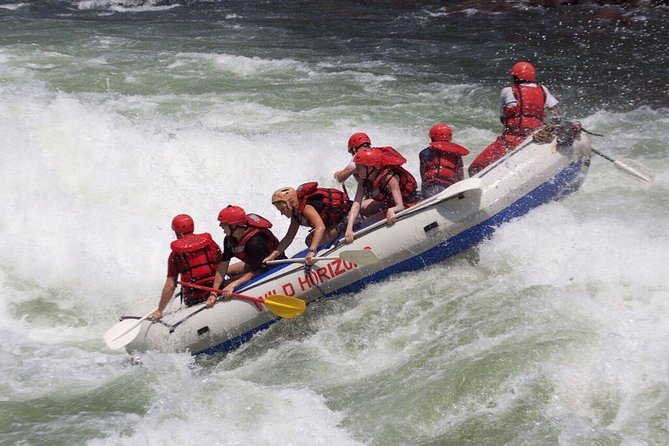
- Rapids change with the season: Low-water trips run Rapids 1 to 19, while high-water trips usually run Rapids 11 to 23.
- The walk is part of the challenge: You climb down to the river and back up about 750 feet to the gorge rim.
- Guides do more than steer: You actively help paddle and maneuver the raft through both rapids and calmer water.
- Lunch comes at the gorge top: In low water, lunch is at Rapid 19. In high water, it is at Rapid 23.
- The price covers useful basics: Transfers from Victoria Falls town hotels, gear, and lunch are included, but there is a separate $10 river usage fee.
- This is an adult-level adventure: The usual minimum age is 15, with younger children accepted only at management’s discretion.
Why the Zambezi rafting route is so special
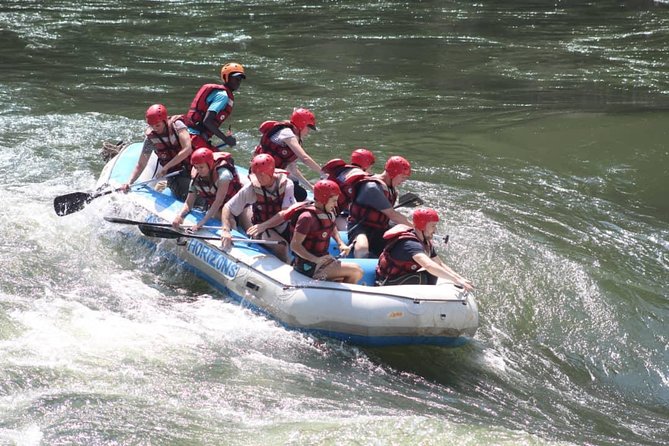
The setting gives this trip its force. You are rafting on the Zambezi after it has poured over Victoria Falls, then forced its way through a narrow gorge. The river is not merely scenery around the activity. It is the whole show, with big drops, fast turns, calmer pools, and a route that changes as water levels rise and fall.
The river’s rating matters. Grade V rapids are at the top end of commercially run white-water rafting. That does not mean every moment is uncontrolled chaos, but you should expect hard paddling, quick instructions, jolts, and the possibility of being thrown into the water. Your guide controls the raft, yet your effort still matters.
You sit around the raft and help the guide manage it through the river. The precise setup depends on the type of raft used. In one arrangement, the guide works from the middle with 12-foot oars while passengers sit at the front and rear and hold the safety line. In another, everyone around the edge paddles and does not hold the safety line. Either way, listen closely and react quickly.
That active role is one reason I prefer this trip to a passive boat ride. You are not simply being carried through the Zambezi. You become part of the crew, even though the guide remains responsible for direction and safety.
More Whitewater Rafting in Victoria Falls:
- Zambezi River Class IV-V White-Water Rafting from Victoria Falls
★ 5.0 · 243 reviews - Half Day Zambezi Whitewater Rafting
★ 5.0 · 149 reviews - Whitewater Rafting Adventure on the Zambezi River, Victoria Falls Zimbabwe
★ 5.0 · 29 reviews
The 7:30 am start and Victoria Falls pickup
The day begins at 7:30 am, with transfers available from bed-and-breakfasts, guest houses, and hotels in Victoria Falls town. That pickup area is limited, so you should confirm that your accommodation qualifies before booking or arrange your own way to the meeting point.
The early start makes sense. A seven-hour outing needs room for transport, the gorge walk, safety instructions, rafting, and lunch. It also gives you a better chance of completing the river section without turning the day into a rushed exercise.
Wear clothes that will stay on in moving water. Loose hats, unsecured sunglasses, dangling straps, and anything valuable can disappear quickly. Leave personal valuables in a safe place, as advised, and choose footwear that can handle wet rocks and a steep trail.
The equipment includes rafting gear and a wetsuit in winter. Water temperatures and air conditions vary, so the wetsuit may be useful during the colder part of the year. One warm-weather participant found the water comfortable and did not need one, but you should not assume conditions will feel the same on your date.
Walking into the gorge before the first rapid
The route to the river is not a minor transfer between activities. It is a steep, rocky descent into the gorge. You need balance, sure footing, and enough energy left for the rafting itself.
The walk out is the harder point for many people. The climb rises roughly 750 feet to the top of the gorge, and it comes after the physical work of paddling. One participant described the climb as very tough, while another stressed the need for appropriate footwear. I would treat this as a fitness requirement, not a small-print warning.
You do not need to be a competitive athlete, but you should be comfortable with sustained exertion on uneven ground. If knee, heart, breathing, or mobility problems make steep climbs difficult, this is probably not the right activity. The operator can refuse participation if someone clearly cannot cope with the demands of the day.
Once you reach the top after the river run, cold beer, soft drinks, and water are available. That small detail matters. The climb can leave you hot and drained, and having drinks ready at the rim makes the finish much more pleasant.
Low-water rafting from Rapids 1 to 19
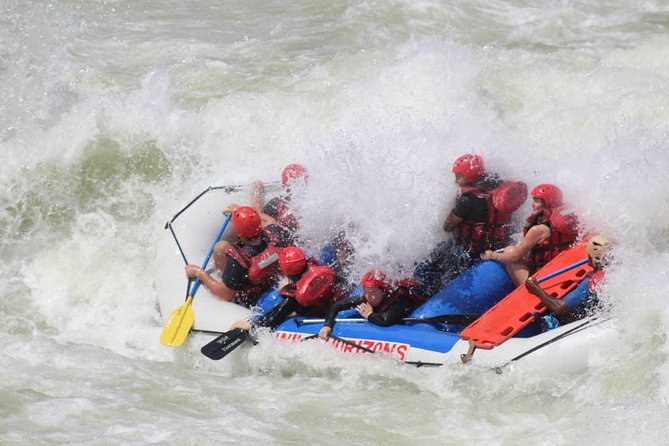
Low-water rafting generally runs from August 10 through December 25. The route covers Rapids 1 to 19, with lunch served at the top of the gorge near Rapid 19.
These dates are approximate, not a guarantee. River levels can affect the exact route and the way each rapid behaves. In low water, the river may expose more rocks and channels, changing how the raft moves through the rapids. You should expect the guide to adapt the plan to current conditions.
The lower water route offers a longer sequence beginning at Rapid 1. That gives you an early chance to settle into the commands, learn how the raft responds, and find your rhythm before harder sections arrive. The ride still requires attention from start to finish, since calmer stretches can also require paddling and repositioning.
The lunch stop at the gorge top provides a natural break after the river section. It also means you will not need to carry a full meal through the raft. Lunch is included, which adds real value to the price and keeps the outing simple.
A few more Victoria Falls trips worth weighing up
- Helicopter Scenic Flight over Victoria Falls 12-13 minutes Flight
★ 5.0 · 1,391 reviews - Victoria Falls: Dinner Cruise on the Zambezi River
★ 4.9 · 925 reviews - Dinner Cruise on the Zambezi River
★ 5.0 · 518 reviews - Victoria Falls: Chobe National Park Day Trip with Lunch
★ 4.7 · 518 reviews
High-water rafting from Rapids 11 to 23
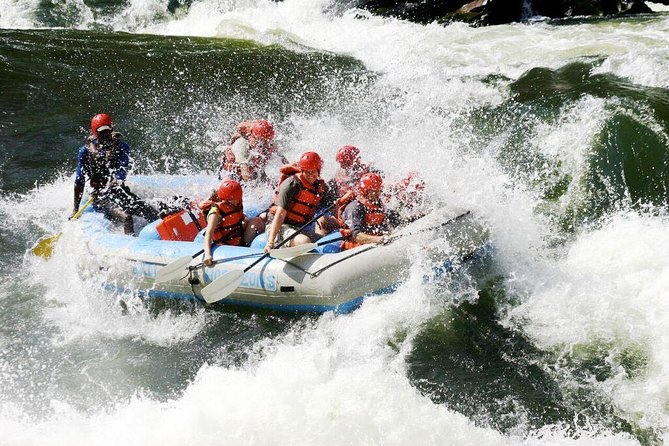
High-water rafting generally runs from December 25 through August 10. The route usually begins at Rapid 11 and continues to Rapid 23, with lunch at the top of the gorge near Rapid 23.
A high-water route does not mean an easier route. You skip the first group of rapids, but the later section can carry greater force. One past participant specifically noted that high water made the first 10 or so rapids unavailable. That is an important point if you have pictured a fixed sequence from a brochure or itinerary. The river decides.
The high-water route may suit you if you want the most forceful version of the Zambezi experience, but the operator makes the final call based on conditions. You should see the changing rapids as part of the nature of the activity, not as a fault in the planning.
The guide’s job becomes especially important when the water is high. Commands need to be clear, and you need to respond without delay. James received praise for keeping the group informed and explaining what to do and when. Colgate was also singled out for patience, humor, and teaching people how to approach each rapid. Those details point to the kind of leadership that can turn fear into focused excitement.
What the rafting itself demands
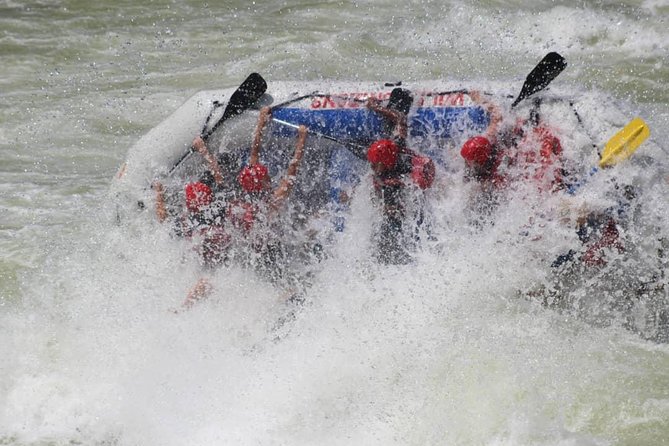
You will paddle, brace, hold on, and follow instructions. The calm stretches are not always rest periods, since passengers may still need to help move or position the raft. Expect your arms, shoulders, and legs to work.
The guides control the route, but you cannot switch off. You may be seated at the front or rear in one raft arrangement, or around the perimeter in another. Follow the briefing carefully so you know when to paddle, when to hold the line, and how to respond if the raft shifts.
The best guides make the instructions easy to follow without making the day feel stiff. James was praised for keeping things funny while explaining the next move. Colgate was praised for giving people time to learn and for allowing swims during calm stretches when the heat made a break welcome. That blend of discipline and good humor is valuable in an activity where tension can build quickly.
You should expect to get wet. The name of the activity is not being modest. Wear clothing that cannot be pulled away by the water, and avoid anything valuable. A camera or video service is offered on every trip for an extra fee, which may be the safer way to get action images without risking your own equipment.
Lunch, drinks, and the end of the route
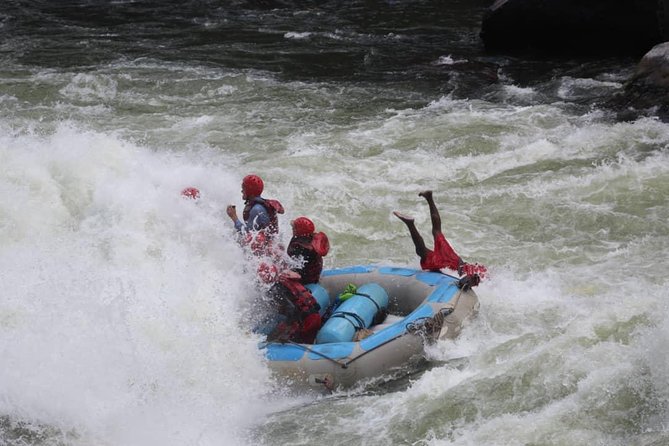
Lunch is served at the top of the gorge, either near Rapid 19 on the low-water route or Rapid 23 on the high-water route. This timing works well because it follows the main river section and gives you a chance to eat after the biggest physical effort.
The meal is included, but the supplied details do not specify the menu. I would not book this expecting a particular dish. Think of lunch as practical fuel rather than a separate food tour.
Drinks at the gorge top are another useful part of the finish. Water is especially important after paddling in the heat and climbing out. Beer and soft drinks are available too, but rehydration should come first.
The full outing lasts about seven hours. That length includes more than time in the raft, so do not expect seven straight hours of rapid running. The gorge walk, preparation, safety instructions, river pauses, lunch, and return all form part of the day.
Is $120 a fair price?
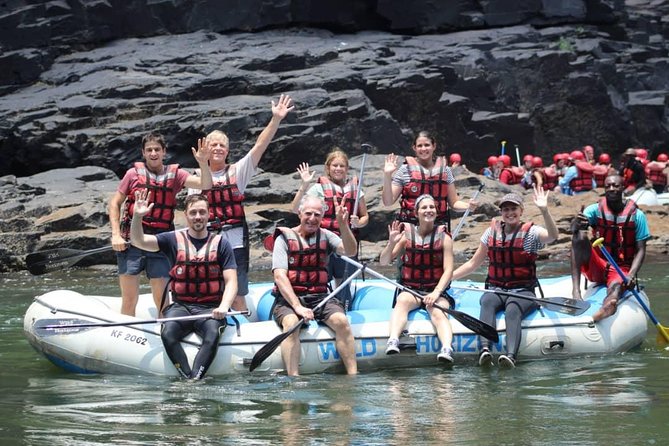
At $120 per person, the package offers solid value for a specialized full-day adventure. You receive transportation from qualifying Victoria Falls town accommodations, rafting gear, and lunch. For a demanding activity in a remote gorge, those included elements reduce the number of practical details you must arrange yourself.
You must add the $10 river usage fee per person. Personal expenses and visa fees are also excluded. Tipping is not compulsory, but the suggested guideline is $10 per guest per day for the guide and $5 per guest per day for other staff if you want to show your thanks.
The price is easiest to justify if you want an active Zambezi experience rather than another viewpoint around Victoria Falls. It is less compelling if you are mainly seeking scenery, because the physical cost of the day is part of what you are buying.
The maximum group size is 40 people. That is not a tiny private outing, so the experience can feel more communal than personal. At the same time, the guide team and raft arrangement determine how much individual attention you receive. If small-group intimacy is your top priority, ask about the group setup before confirming.
Who should book this Zambezi adventure?
I would recommend it to fit adults and older teenagers who enjoy demanding outdoor activities. The usual minimum age is 15, though management may accept a younger child if that child has the maturity and strength for the trip and fits the life jacket properly.
There is no stated maximum age. That does not mean age is irrelevant. The operator may refuse anyone who appears unable to manage the rafting and gorge climb. Fitness, coordination, and confidence matter more than the number on your passport.
This trip suits you if you:
- Want serious white-water action below Victoria Falls
- Enjoy following instructions and working as part of a raft crew
- Can manage a steep, rocky climb after exertion
- Are happy to get wet and leave valuables behind
- Prefer an active day to a quiet river cruise
I would choose another Victoria Falls activity if you have limited mobility, dislike steep trails, or want a low-effort way to see the Zambezi. The rafting is the centerpiece, but the walk is not optional.
Booking, cancellation, and practical choices
Confirmation is received at booking, and free cancellation is available until 24 hours before the local start time for a full refund. Cancellations or changes made less than 24 hours before the start are not accepted for a refund.
The tour is booked an average of 66 days ahead, which suggests you should not leave it until the last minute if your Victoria Falls dates are fixed. That is especially sensible during a short stay, when one missed activity can affect the entire plan.
Check the season carefully. Low-water dates are approximately August 10 to December 25, with Rapids 1 to 19. High-water dates are approximately December 25 to August 10, with Rapids 11 to 23. Since the dates are approximate and river conditions can affect the route, ask what section is expected when you book.
Should you book it?
Book this rafting trip if you want the Zambezi at full strength and have the fitness to earn the reward. The guides, included lunch and transfers, changing seasonal routes, and access to Grade V rapids make it a strong choice for an active Victoria Falls itinerary.
Skip it if the gorge climb sounds harder than the river sounds exciting. For everyone else, this is a memorable, demanding day where the best moments come from working together, listening to a good guide, and watching a powerful river decide what happens next.
FAQ
Where does the white-water rafting take place?
The rafting takes place on the Zambezi River below Victoria Falls in Zimbabwe.
What time does the experience start?
The scheduled start time is 7:30 am.
How long does the rafting experience last?
The full experience lasts approximately seven hours.
Is transportation included?
Transfers are included from bed-and-breakfasts, guest houses, and hotels in Victoria Falls town only.
What equipment is provided?
Rafting gear is provided, including a wetsuit in winter.
Is lunch included?
Yes. Lunch is served at the top of the gorge, near Rapid 19 on the low-water route or Rapid 23 on the high-water route.
What is the minimum age?
The usual minimum age is 15. Management may accept younger children if they have the right maturity and strength and fit properly into a life jacket.
Is there an extra river fee?
Yes. A river usage fee of $10 per person is not included in the tour price.
Newly listed in Victoria Falls
- Zimbabwe: Victoria Falls Full-Day Package★ 5.0 · 2 reviews
- Zambezi River: Kid-Friendly Whitewater Rafting★ 5.0 · 3 reviews
- Zambezi 3hr Game Drive★ 4.6 · 5 reviews
- Zambezi River: Dinner Cruise★ 5.0 · 2 reviews
- Zambezi National Park Private Wildlife Safari (4 – 10 hours)★ 4.9 · 9 reviews
- Victoria Falls: Zipline Experience with Transfers★ 5.0 · 2 reviews
- Victoria Falls Zimbabwe: Traditional Village Tour★ 5.0 · 2 reviews
- Victoria Falls Village Cultural Tour – Authentic Experience★ 5.0 · 3 reviews
Whitewater Rafting, compared.
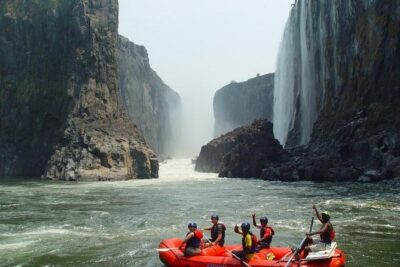
Zambezi River Class IV-V White-Water Rafting from Victoria Falls
Read our review →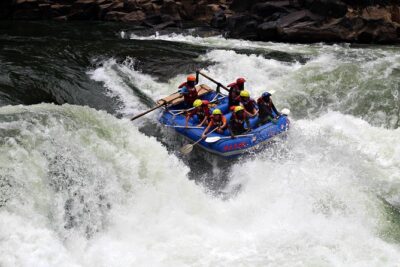
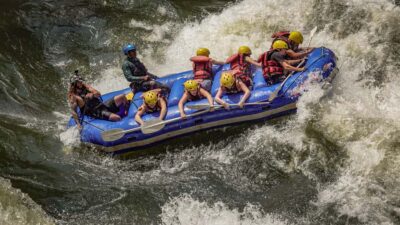
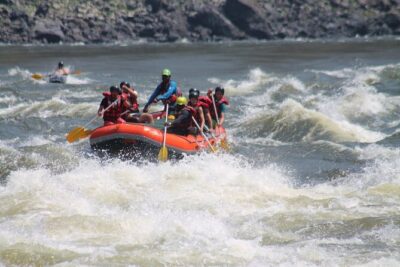
Whitewater Rafting Adventure on the Zambezi River, Victoria Falls Zimbabwe
Read our review →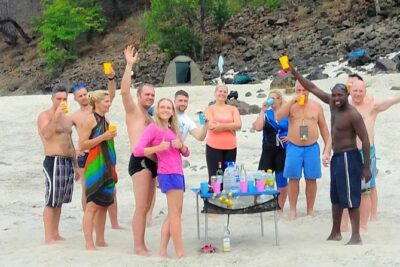
5 Days & 4 Nights Whitewater Rafting Victoria Falls
Read our review →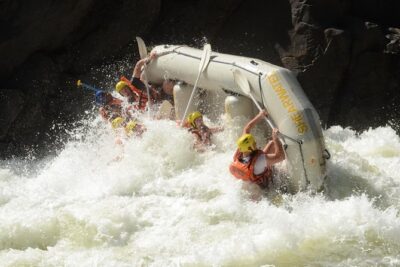
Whitewater Rafting on the Zambezi River from Victoria Falls
Read our review →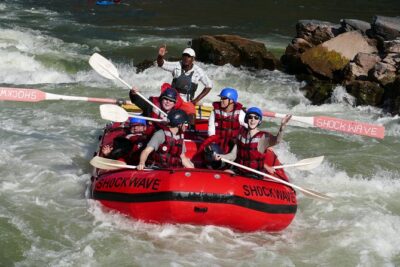
Zambezi Whitewater Rafting & Open Bar Sunset Cruise
Read our review →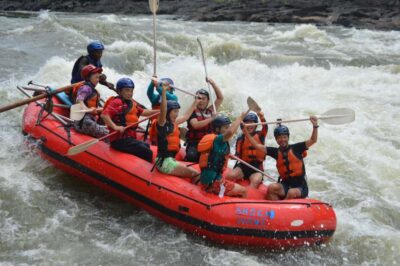
Browse the lists this tour appears in